Showing posts with label Book Review. Show all posts

23 Nov 2024

The Journey of Psychosynthesis


Astrological Psychology and Psychosynthesis go hand in. Bruno and Louise Huber, who researched and developed the Huber Method - the innovative approach to astrology that I write about here - worked alongside Roberto Assagioli, the founder of Psychosynthesis.

*  *  *  *  *

Will Parfitt’s latest book offers a comprehensive and very readable overview of Psychosynthesis. But it’s more than just a book; it’s a well-structured treasure trove of insightful practical lessons and exercises for anyone seeking to increase their self awareness and make the best choices they can as they journey through life.

Based on his work and experience of more than forty years as a psychotherapist and trainer, Will has drawn on the Psychosynthesis distance learning course he created, and he shares it in this book. The reader is guided, at their own pace, on a journey to the centre of their true self. Travelling this path, the reader – who could more appropriately be called “the explorer”, since this is a journey of discovery – is encouraged at each stage to gently open to their unique wholeness. The journey is one to be savoured, not rushed, with pauses for review and consolidation along the way.

Regardless of whether you’re new to Psychosynthesis, or are an old hand at practising this approach to self awareness, the material for this journey is well-written, clearly laid out, and presented in a relaxed and engaging style. It hits the spot. Will doesn’t talk up or down; his words speak directly from his centre. Throughout the journey, readers are encouraged to take part in the practical exercises which can be both enlightening and challenging. A break and a period for reflection is recommended at the conclusion of each lesson. The reader is encouraged to record and consolidate what they have experienced before moving on.

Life crises and turning points are focussed on, as are sub-personalities – those different parts of us - which are the diverse aspects and roles of the personality with their own individual wants and needs. One lesson covers the art of self-identification, focusing on how we do this and how it colours and influences all we encounter in everyday life. Here, Will encourages the reader to disidentify from the different roles of these sub-personalities or selves, and become the driver in their life rather than one of the passengers. There are exercises that are both challenging and empowering for anyone who has ever asked themselves “Who am I?” as it is oh-so-easy to identify with and be attached to one of our many “selves” - our sub-personalities. Learning how to connect with our core self and choose to be attached or not attached to our various sub-personalities offers the reader freedom.

On disidentification from our thoughts, feelings, roles and mental attitude, Will asserts that if we are able to disidentify from a sub-personality “we will have it rather than it having us.” On a personal level, those words resonated for me, and I will use them as a reminder and mantra when I find myself coming from a sub-personality.

The Journey of Psychosynthesis is one which will lead you to your core, your centre and your soul. If you’re a newcomer to Psychosynthesis you may want to embark on this journey and see it through sequentially from start to finish. If you’re already familiar with Psychosynthesis I can think of no better way of refreshing your perspective on whatever is going on in your life by choosing an appropriate staging post from the book and focussing on that. Will asserts that once you have the basics of Psychosynthesis, you can work with what emerges from inside, not following a pre-set plan but making the best choices you can.

You can read about how Bruno and Louise worked, studied and trained in Psychosynthesis with Roberto Assagioli in Florence in Piercing the Eggshell.


28 Jul 2024

Piercing the Eggshell – the story of Bruno and Louise Huber


What did you do during the first big lockdown on 2019?

Unexpectedly, along with Barry Hopewell as co-author, I researched and helped compile a biography of Bruno and Louse Huber, pioneers of the Huber Method of Astrological Psychology. This non-predictive use of astrology combined together with psychology is now used worldwide as an astrological psychological tool to help people realise their own potential and, ultimately, contribute to making the world a bit better than it is right now.

The Huber’s story is a fascinating, real-life one, and tells of the obstacles they had to overcome, the sacrifices they had to make and the determination they had to hold on with in order to realise their vision of doing something for humanity.

It wasn’t easy, but these two were people were very special, driven and motivated beyond personal gain and in pursuit of more spiritual goals and the evolution of humankind. They were influenced and helped by Italian psychiatrist Roberto Assagioli, who founded Psychosynthesis, and they founded the Astrological Psychology Institute in Zurich in the early 1960s.

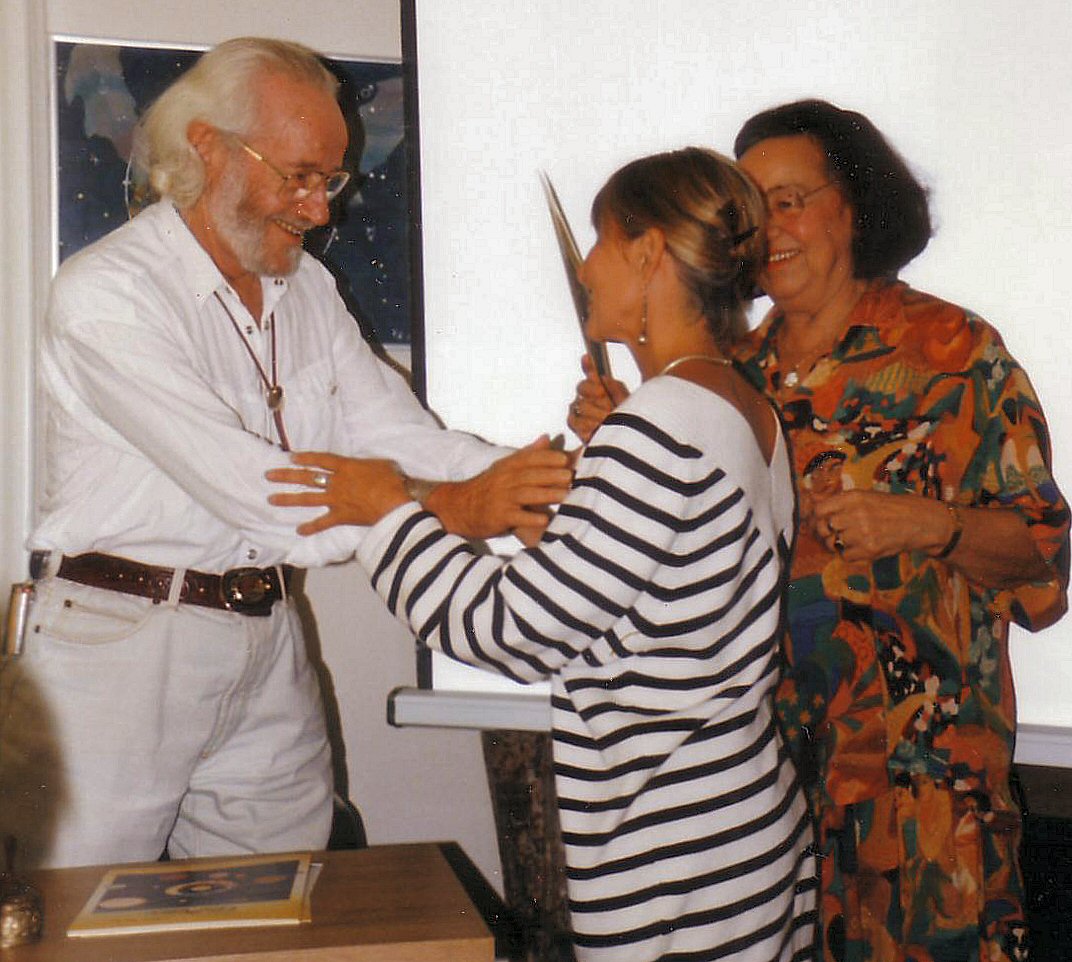
Bruno and Louise presenting an English Huber School student with her Diploma in Astrological Psychology

Since then, their well-researched approach, teaching and books on what is now known as The Huber Method, is used in many countries around the world. It focusses on personal and spiritual growth and on moving us as participating humans, into living our lives as kinder, and more aware people.
 
So why is the title of the book "Piercing the Eggshell"
 
Bruno Huber often likened a personal spiritual awakening to that sudden "aha" moment as when a chick emerges from it's shell, pokes it's head up into the world around it and sees that it is a whole lot bigger than the world it has been used to inside the shell. In the same way, we can metaphorically pierce our own eggshell and expand our awareness and capacity for growth. This is described more fully on p.84 of the book, along with a description of Bruno's Amphora Model, shown on the front cover.
 
"The shell represents the mental arguments we have to protect us but the impetus to break out comes from within as our spirituality is awakened. When this happens we leave the realms of normal consciousness and reach for answers 'out there' beyond our normal range. It means taking risks, but it's a movement of mind and consciousness." (book extract, p. 85)

You don’t need to know any astrology to enjoy the book as it’s an intriguing stand-alone read, but if you do understand some astrology you’ll probably get a lot more from it – and if you don’t know any astrology it might inspire to find out more. The photos and the few charts it contains are all in full colour, and there are many personal accounts and memories of Bruno and Louise contributed by students who knew them and worked with them, myself included.

Piercing the Eggshell is available from all good booksellers and from Amazon, as well as being available as an e-book. Click on the link for full details.

But best of all, go read it and be impressed – not that we wrote it – but by what these two remarkable people did and what their gift to humanity is.

Bruno and Louise Huber - two remarkable people

Also see more info on this book, which has been translated into German and Spanish, here and here, and has been favourably reviewed by an non-astrologer:

Fascinating Biography 
"Piercing the Eggshell" reviewed by Will Parfitt, Psychosynthesis therapist and author.

If you are an astrologer I would think this book is a must, even if you don't follow the Huber style of astrology; the story of how the Hubers created this new, very workable approach is interesting even to a non-astrologer like myself. 

Better still, for astrologers and non-astrologers, this is a tale of two people's indomitable will to create a new psychological science using astrological connections to include and raise consciousness to a deeper spiritual connection. A fascinating and most unusual biography, very interestingly illustrated with relevant photos.

I was particularly interested in the influence of Roberto Assagioli and Psychosynthesis on their work and the development of Huber astrology, and how whilst he fully supported them in their explorations, even giving Bruno Huber access to all his client notes, they worked hard to collate, edit and where necessary translate his writings into what became the key work in the Psychosynthesis world. 


10 Jul 2024

Bittersweet


Sun, clouds and sea, Isle of Barra

In the book Bittersweet – how sorrow and longing make us whole by Susan Cain, the author explores something you might recognise immediately, just by reading the title, especially if you’re the kind of person who’s drawn to what is poignant in life. This set me thinking astrologically about which planet or planets might be associated with what is bittersweet in life, and I came up with strong possibilities for these being Moon, Venus and Neptune, but of course it doesn't stop there and readers may have their own ideas - if so, please share/comment.

In astrological psychology, the Moon represents the sense of self we gain through our feelings and emotions, and in the natal chart it can indicate how we might go about getting our emotional needs met. The Moon is also an indicator of the inner child. It can signify our spontaneous and fun-loving child-like responses, and it also acts like a mirror, reflecting what's going on around us because it can sense and pick up on atmospheres and feelings very easily. It's an important sensing tool, the part of us that feels.

Venus represents the drive to be selective and choose, using discrimination. Venus is associated with our ability to form relationships, to develop and express our aestheic tastes and preferences, to pursue what is harmonious and beautiful and, as a sensory organ, to use our physical sense of taste. The energies of Venus will be as fully engaged when you're eating a meal, as when you're visiting an art gallery, deciding on a colour scheme, listening to a piece of music or forming a new friendship. And, of course, falling in love.

Neptune notches things up to a higher and often far more inclusive level. Neptune is most likely to be the source of kindness, unconditional acceptance and non-judgemental love at its highest level - the level of mind - where "there is a desire for universal love as the highest ideal"  to quote from their book, The Planets, by Bruno and Louise Huber. 


On Neptune, they continue, "There is a heightened sensitivity and a refined awareness of communication (empathy) that breaks through all walls and flows from heart to heart.This is what Assagioli called loving understanding".

Could this be you, or me, putting this loving understanding into action and remembering to do and be this in our everyday lives? Of course, we all lapse, but if we forget about being kind, pleasant, helpful, inclusive and positive towards others, we stand in line to get an unpleasant reminder if the vitriol comes out in response! 
 
So how does this fit in with the idea of bittersweet?

Merriam-Webster’s dictionary defines Bittersweetness as

a tendency to states of longing, poignancy, and sorrow; an acute awareness of passing time; and a curiously piercing joy at the beauty of the world.”

To that I’d add yearning, the desire to be reunited with something or someone who is no longer there, or to search after an elusive goal, place or state of mind which we seek in order to feel whole, fufilled or spirit-full. Bittersweet includes both the light and the dark, exploring how the combination and meeting of sadness and joy can trigger our own creativity and open a portal to something greater than our personal selves. It can be transformative, and can be recognised as something we already “knew” when we meet it (but had forgotten about).

Bittersweet is found in sad (often beautiful) music with minor key notes…..in browsing old family photographs…..in rainy days….in intense reactions to music, art, nature and beauty, and is often accompanied by goosebumps. I’d add, based on my own experience of bittersweet, that a flash of insight, or a sudden recognition of a half-remembered, dream-like something from the past could be bittersweet too.

The book contains a short quiz to help the reader identify whether or not they are a bittersweet type, and it’s also available on line, as is her curated list of bittersweet music. You may want to try that out.

Cain shares examples of bittersweet experiences in her own life and draws on the experiences of others she meets during her thorough research for this book. She shows how a bittersweet state of mind is the quiet force which helps us transcend our personal and collective pain, whether from a death or breakup, addiction or illness. She asserts that if we don’t acknowledge our own heartache we can end up inflicting it on others, maybe through abuse, domination, or neglect. Once we realise that all humans know—or will know—loss and suffering, we can turn toward one another, rather than turn away, and connect with joy as well as sadness in a bittersweet moment.

I’ll share a couple of quotes from the book. If you read it, I hope you gain as much from it as I did:

Most of all, bittersweetness shows us how to respond to pain: by acknowledging it, and attempting to turn it into art, the way musicians do, or healing, or innovation, or anything else that nourishes the soul.

The love you lost, or the love you wished for but never had: that love exists eternally. It shifts its shape, but it’s always there. The task is to recognise it in its new form.

For more info see Susan Cain’s website


5 Jan 2024

Will Parfitt reviews The Second Time Around

Retired psychotherapist and teacher of psychosynthesis and Kabbalah, Will Parfitt has contributed our first review of the recently published book The Second Time Around.
 

First a disclaimer: I am a contributor to this book which includes the stories of 25 people reflecting on key elements of their life and experiences getting to 70 or older. I am only “into astrology” in a very minor way but have always found the Huber approach, used here, to be very informative on a psychological level. This book delivers!

I haven’t considered the astrological stuff in here, it is a bit beyond me really, but it is fascinating to read different peoples’ experiences and how, unexpectedly, we can consider 70+ is a favourable time for growth and renewal in our lives, with the opportunity to finally move beyond the limitations set by our earlier life experiences.

So, bottom line is, you won’t be disappointed if you purchase this book which I imagine will become a classic astrology title in years to come, opening up new levels of research and interest. And even without the astrology it is engaging and revealing reading.

6 Oct 2022

Rose of Heaven

                    Rose of Heaven 

          and other stories by Will Parfitt


I confess to not being a fan of short stories, always finding them, as a child and teenager, like a taster or snack, and never as satisfying as the full-blown meal of a novel. My view towards them changed when I learned that short story writing is a specific and exacting art, so with this in mind – and with an open mind too - I read Rose of Heaven and the other eight short stories in Will’s latest book.

I wasn’t disappointed. Far from being light snacks, each one comes with a meaty message elegantly seasoned with positive and/or thought-provoking ideas. Will draws on his experience of working for many years as a psychotherapist, and his own search for truth and meaning. The stories all have a psychological slant, which may or may not hit the spot, depending on where the reader is on their own life path

Characters come across as real, and there is a gentle touch of humour in several stories. Nothing Like a Hole in the Head had me intrigued and made my toes curl at the same time. It’s probably the one story which impressed me most, along with

Mabel’s Mindfulness, which made me smile, has a feel-good quality and an interesting punchline. The title story, Rose of Heaven, is possibly based on the author’s personal experiences and searches. It sets the scene, signalling (to me at any rate) that the reader will be in good hands in this book. “I love you for who you are, not what you do…..” says Rose to the anonymous character who is telling the tale.

I will return to read Rose of Heaven and the other stories at a later date. I suspect there is a mirror hidden in each and every one of them which will offer me insights and encourage reflections and connections.

Recommended reading? Yes!


Will Parfitt is the author of several non-fiction books on psychology and psychosynthesis. 

His most recent book, "The Magic of Psychosynthesis", is reviewed here on this blog.

This book and "Rose of Heaven" are available on Amazon.

13 Dec 2021

The Four-Fold Way

Some time back in the 1990s I came across the Four-Fold Way, which was referred to at a personal growth workshop I attended. The Four-Fold Way was attributed to anthropologist Angeles Arrien, and I was impressed by it’s four simple points of wisdom:


· Show up and choose to be present

· Pay attention to what has heart and meaning

· Tell the truth without blame of judgement

· Be open to outcome, not attached to outcome


This led me to read her book, entitled The Four-Fold Way - Walking the Paths of the Warrior, Teacher, Healer and Visionary. The book, its content and ethos have come back to mind right now. The times we are currently living in are full of change and divisions within society. Climate breakdown is not new, but the need to take on board and address the problems we're making for ourselves and future generations now have to urgently be addressed.

It's time for us all to start taking responsibility for ourselves and stop moaning.

Angeles Arrien suggests four paths we might take, and her opening sentence, way back in 1992 when the book was published, is pressingly relevant today. She says,

"Today it is imperative that we pay attention to ecological issues. Our planet, the house we live in, is in danger of becoming unliveable, due primarily to the neglect of our own industrialised society. It is clear we need to take action before it is too late."

She goes on to say that the word ecology comes from the Greek word oikos, which means house, in other words our "house", our planet.

The four ways she describes can be shown diagrammatically using the medicine wheel layout and includes the four points of the compass, and the four elements of fire, earth, air and water. Each Way has a single line description which more or less lays out what it's about.

The Way of the Warrior - Show up and choose to be present- the message here is to stip dillydallying about and do something, take action. The associated human resource is power, the way of living is right action.

The Way of the Healer - Pay attention to what has heart and meaning - this suggests don't allow yourself to get distracted (by smart phones, social media etc?) but remain in touch with what is really important and connected to your heart. The associated human resource is, unsurprisingly, love; the way of living is right speech.

The Way of the Visionary - Tell the truth without blame or judgement - here we have to remember to speak our own truth, be true to ourselves, and not take on board what others have tried to foist upon us. This can be a tough one as it's much easier to go along with things we don't really agree with in order to fit in, or keep the peace. And we have to remember not to blame or judge ourselves and others. The associated human resource here is vision, and the way of living, right placement.

The Way of the Teacher - Be open to outcome, not attached to outcome - the message is to stay open to the new and not have an end goal in mind. A good teacher will always be open to new ideas and viewpoints because so much fruitful material can come from staying open and learning more. Good teachers are always learning! The associated human resource is wisdom and the way of living is right timing.

Angeles Arrien’s work as an anthropologist, educator and facilitator of workshops aims to build a bridge between cultural anthropology, psychology and comparative religions, revealing how indigenous wisdoms are relevant to our families, professional lives and our relationship with the Earth itself. There is something in The Four-Fold Way for all who wish to develop themselves, their potential and their ability to live life creatively, and we need this approach more than ever right now, in our current times.

“Do all the good you can, with all the means you can, in all the ways you can, to all the people you can, as long as you can” - Angeles Arrien.


5 Oct 2021

Piercing the Eggshell translated

Image

 Image

It's less than a year since Piercing the Eggshell, the biography and life story of Bruno and Louise Huber and their Astrological Psychology, was published in paperback. It has also been published as an ebook.

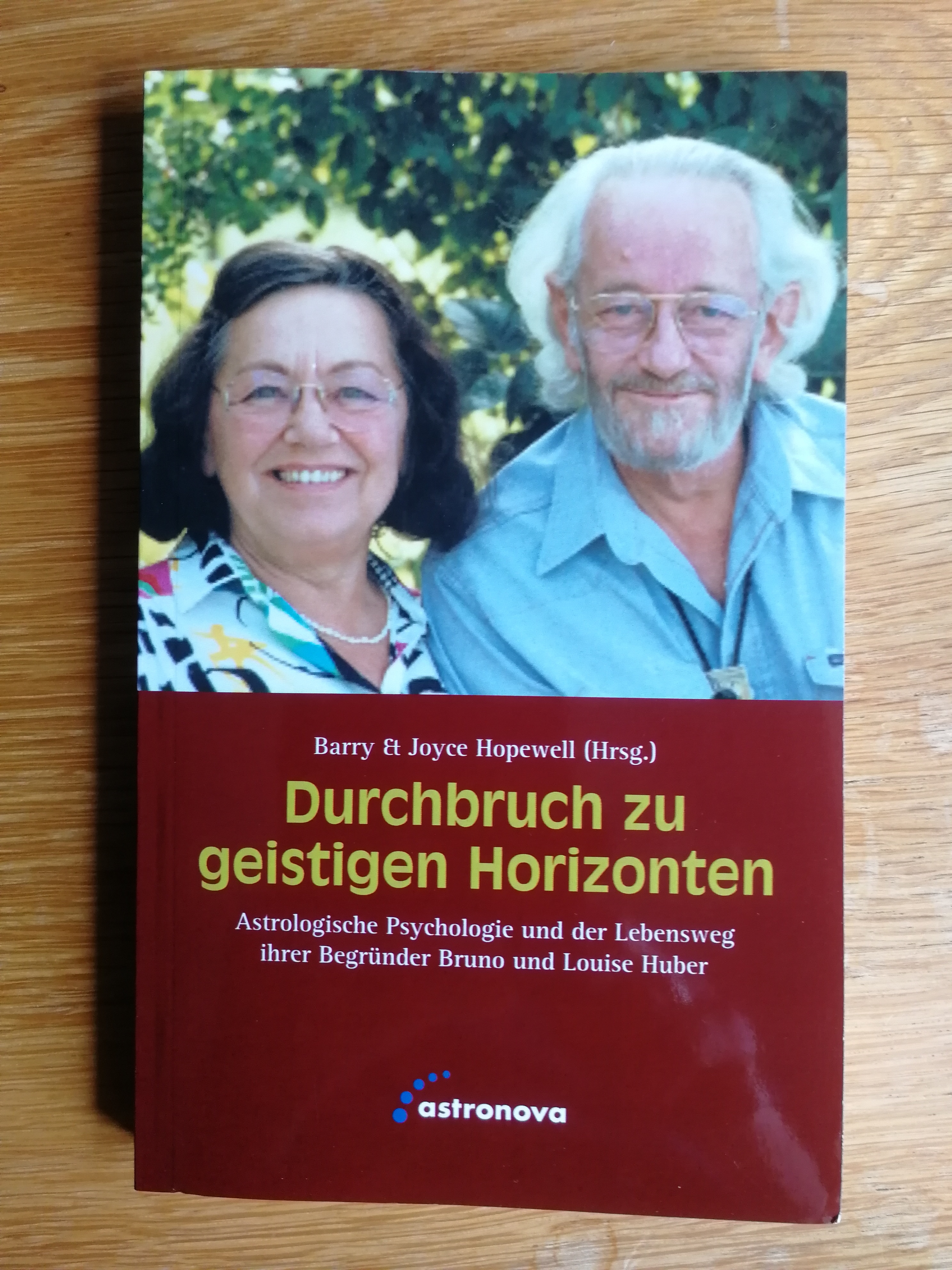
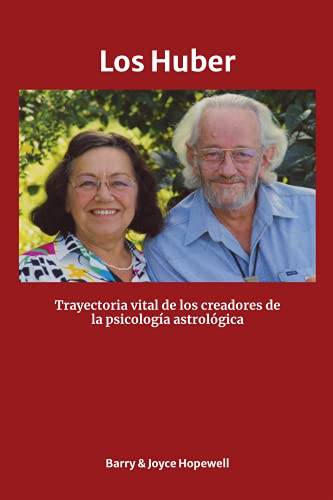
I'm delighted to report that the book has now been translated into German and Spanish. The work of the Hubers, based in Zurich, was initially only available in German. The founding of first the English Huber School, followed by the Spanish Huber School - both teaching the Huber Method of Astrological Psychology to an increasingly interested audience in north and south America - ensured the dissemination of their work to what is now a worldwide audience.

Piercing the Eggshell isn't a stuffy biography; it's full of real life anecdotes as well as factual events, and it makes for an interesting read as it covers how astrological psychology was researched and developed. It also covers why astrological psychology, as a method of personal and spiritual growth, is not only significant, but is downright helpful and useful as well.

Piercing the Eggshell in English is available from all good booksellers, from Amazon and from the APA Book Shop. 

 
Fascinating Biography 
"Piercing the Eggshell" reviewed by Will Parfitt, Psychosynthesis therapist and author.

If you are an astrologer I would think this book is a must, even if you don't follow the Huber style of astrology; the story of how the Hubers created this new, very workable approach is interesting even to a non-astrologer like myself. 

Better still, for astrologers and non-astrologers, this is a tale of two people's indomitable will to create a new psychological science using astrological connections to include and raise consciousness to a deeper spiritual connection. A fascinating and most unusual biography, very interestingly illustrated with relevant photos.

I was particularly interested in the influence of Roberto Assagioli and Psychosynthesis on their work and the development of Huber astrology, and how whilst he fully supported them in their explorations, even giving Bruno Huber access to all his client notes, they worked hard to collate, edit and where necessary translate his writings into what became the key work in the Psychosynthesis world. 
 

You can read how the book came about here and another review of the book is here.


"Uranus is an instrument we use to pierce through the eggshell towards spirituality"

Bruno Huber

16 Apr 2021

Quiet


A while ago I had a Myers-Briggs Personality Type Assessment test – not for any specific reason, more for personal interest and out of curiosity to see what emerged. I was assessed, by a qualified assessor, to be an IFNP personality type.

A brief explanation of what this means will be helpful here:

 I = people who prefer Introversion tend to focus on the inner world of ideas and impressions; 

N = preferring Intuition, these people tend to focus on the future, looking for patterns and possibilities; 

F = people who prefer Feeling tend to base decisions mainly on subjective evaluation of person-centred concerns;

 P = Perceivers tend to like a flexible and spontaneous approach to life, preferring to keep their options open.

This seemed to fit pretty well with what I already know about myself from and using astrological psychology for the past 34 years, and I was able to relate much of what had been covered in the test, and the final result, to my own chart. It’s strongly I-sided, with triangular aspect figures, has an overall Mutable motivation, has a perceptive Ear/Eye figure, the Jupiter/Neptune conjunction offers intuitive leaps and the Moon sits close to the DC welcoming all-comers.

Cut now to a few weeks later, when I came across a book entitled “Quiet – The Power of Introverts in a World That Can’t Stop Talking” by Susan Cain. The “I” in my INFP personality assessment, standing for Introvert, aroused my interest in what this book had to say. It begins with a brief overview of the Myers-Briggs Assessment, and goes on to explore the realities of Introversion in considerable depth. It’s an intriguing, good read, easy to digest and follow with plenty of illustrative examples taken from real life.

Having been told by someone who knows me that I couldn’t possibly be an Introvert because I’m generally outgoing and find it relatively easy to talk to people, I begged to differ. Only I am aware of how I need to get away from people in order to have some quiet, down time on my own so I can recharge my batteries. I do have a very I-sided chart, with all planets there apart from the Moon, which sits alone on the doorstep of my chart, in full frontal access to the You. This can be useful when working with or meeting others, but it can also be exhausting; I need time on my own to recalibrate and recharge.

19.09.1945, 02.30, Tadcaster UK 
 

As I read this book I became increasingly comforted by the fact that I'm an Introvert. I don't like to shoot my mouth off without a bit of reflection first; I prefer working alone and in silence and although I have worked in a team in an open plan office, I really found it distracting and not conducive to creative thought or productivity. Various social situations which Introverts would prefer to avoid are discussed, such as being at a noisy party. Introverts find being sociable and outgoing quite a strain and a drain, and long to go home, be quiet and read a book. 

Susan Cain's input on these very issues resonated strongly with me. Not that long ago I found myself in a social situation where a game of indoor skittles was declared to be happening. I don’t like competitive games. Hiding at the back of the group I was press-ganged into taking part, my stated preference of not wanting to play ignored, and was assigned to a team. Flinging the ball down the temporarily laid out bowling alley with little interest in the game and little regard for skill, to my horror I found myself in the final three players. What I really wanted to do was go back home and read my Kindle. At that point I made a deliberately bad throw to make sure I was out of the game.

Cain, herself an Introvert, claims that at least one-third of the people we know are introverts. They are the good listeners who prefer to listen rather than speak. They create and innovate but dislike self-promotion; they are not great at selling themselves and their ideas but are most comfortable working creatively in isolation. They are not team workers, yet many of them have made great contributions to society. Here Cain covers the actions and contributions of such people as Rosa Parks, Chopin, Dr. Seuss (author of The Cat in the Hat) and Steve Wozniak.

Cain asserts that society dramatically undervalues introverts, to its own detriment. The ideal of the outgoing, confident Extrovert is embedded in our culture. These people are supposed to be the winners, the leaders, those who can assert themselves by making a big noise (now why does Boris Johnson come to mind here, I wonder?) but many of them may lack the richness of a creative inner world and the insights which come with it.

Of course, both Introverts and Extroverts are needed in our society, and Cain explores how Introverts can, in fact, develop an Extrovert persona – rather like a sub-personality. In this mode the Introvert can be successful in a world which expects outgoing confidence if they can, when required, assume the role of Extrovert. It all started to sound rather like Assagioli’s Psychosynthesis technique of acting “as if” in challenging situations, and this resonated strongly with my experience and understanding of both Astrological Psychology and Psychosynthesis.

Cain relates the experience of a witty, high octane public speaker who can fill lecture halls to capacity, yet needs to retreat to a stall in the gent’s lavatory afterwards for some space to recharge, nurture and soothe his Introverted personality. It’s not that Introverts can’t be “out there”, it’s more that they have to balance their energies and respect their own needs to be quiet in order to do what they are good at. 

Astrological psychology has seemingly limitless boundaries and what can be seen and used in the natal chart can be considered alongside contemporary research into psychological behaviours and conditions, many of which bring us deeper understanding of what being human is about. Little did I know, at the time, where my assessment as an IFNP personality type would lead me!


Susan Cain – http://www.quietrev.com/author/susan-cain/

Susan Cain’s TED talk:

https://www.ted.com/talks/susan_cain_the_power_of_introverts


8 Mar 2021

Under the Stars


If you've ever gazed up at the night sky, dotted with stars, and have felt a sense of wonder at the immensity of it all, you'll probably enjoy this book by Matt Gaw.

You don't need to be an astrologer or an astronomer to appreciate the night sky, simply someone who likes to look up - and maybe get a cricked neck in the process - as you gaze through the darkness of the night.

Ah - and there's the rub. Our nights are nowhere near as dark as they could be in towns and cities, where artificial lights burn unneccesarily through the hours of darkness - street lights, shop lights, office lights, and the latest fad - outside lights on houses which are left on all night. Haven't people heard of sensors which only switch them on in response to movement?

Matt Gaw, in this short and very readable book, argues that too much artificial light is damaging for humans and wildlife alike as it distrupts natural rhythms and blocks out the starry skies which have guided human life on earth for millennia. Owls, bats, hedgehogs and insect species are all affected by too much artificial light. And so are we.

He sets out to walk into the darkness in various locations around the UK - on a beach in Suffolk, in the pitch blackness of the Galloway Forest in Scotland, where he is both spooked and moved by the experience of being alone with the intense darkness and the brilliance of the stars, and on Dartmoor, with all its ghostly legends and vividly clear views of the Milky Way.

Here, I could relate to what he was describing, having been on Dartmoor on a clear, starry night. I've seen the constellations and the sheer, vast immensity of the night sky laid out like a stellar canopy high above my head. Gaw questions whether we remember to look up enough so we can connect with something far greater than ourselves. 

Roberto Assagioli, founder of Psychosynthesis, when seeing clients in his consulting room near Florence, is said to have had a projection of the night sky on the ceiling. When someone troubled came for a session he would dim the lights, and in silence he and his client would sit and look at the stars overhead. After a while, he would return the room to normal lighting and say, "You were having some problems....?" and the session would begin. (Note, this is my recollection of something I heard about Assagioli, but it's probably documented somewhere in one of the many books about him).

If you love the night sky, you'll enjoy this well-written book. Gaw mentions the Dark Sky Discovery Reserves and Centres in the UK, and has whetted my appetite to  visit one. There are plenty of phone apps of the night sky available, so if you catch a clear dark sky, with little or no light pollution, you can easily ID the different constellations and individual stars which are visible through the seasons of the year.


14 Dec 2020

Book Review - Piercing the Eggshell

This book review is a guest blog post, written by Caroline Adlestone, Editor of "Conjunction". I'm pleased to be sharing it since Caroline has spoken warmly about the book, clearly setting out why she liked it, along with outlining what readers might gain from it.

 A “New Science of Man”,

Review of Piercing the Eggshell, The Hubers and their Astrological Psychology, edited by Barry and Joyce Hopewell.


We envisioned a nobler man in a nobler world, and realised that we both wanted to contribute actively to increasing the quality of human consciousness.” So said Bruno Huber as he looked back on the lives of himself and Louise in 1987, 19 years after the formation of API Switzerland.

 Much of this biography of the extraordinary life and work of the Hubers is recorded in their own words. This direct transmission enriches the book and gives us a personal voice of Bruno and Louise Huber. The many writings from which the material is sourced are deftly and seamlessly incorporated chronologically into a compelling narrative. We are taken on a journey of wonder, excitement and sometimes intense, story-telling. In 12 chapters the reader is taken through the lives of the Hubers, the development of astrological psychology, the creation and growth of API Switzerland and its influence throughout the world.

The title of the book Piercing the Eggshell is a reference to the possibility of a connection to the higher self or soul by breaking through the encapsulated ego. It refers to Roberto Assagioli’s Egg model and Bruno’s subsequent Amphora diagram which incorporates the astrological symbols of the planets.

Bruno and Louise Huber

The book is beautifully illustrated throughout and the many photographs add to the intimacy of the story being told. The use of charts adroitly gives depth and added resonance to the storyline for those who can understand and gives clear and tangible examples of how the method works to those unfamiliar with astrological psychology. And for non-Huber astrologers there is a very lucid description of the Huber method in chapter one. The clarity given to the technical side of astrological psychology means this book can be read by everyone.

The history of the many translated and truncated publications of the Hubers is expertly explained by the editors, Barry and Joyce, who have been publishers of the Huber's books in English since 2003.

The Hubers’ early life story is told from the world war period in which they grew up, emerging from the Third Reich into a world in which they both felt as though they wanted to understand and to help people. The story continues to their fated meeting – six months before she met him Louise had seen Bruno in a meditation – he fell in love and had to marry her, and only her. We follow them through their setting up of the Arcane School in Geneva and their formative and magical years in Florence in a stimulating spiritual environment with Roberto Assagioli. Their dedication and tenacity was always driven by their single-focussed goal.

In a literal sense, Bruno once remarkably journeyed 700km on his bicycle across the Alps over a 2500 metre high pass to be with Assagioli in Arezzo as there was no other way of getting there. Those early days were hugely interesting, fertile and creative but they were also fraught with insecurity of the unknown. Something that to Louise was not easy. Their own individual personal growth is shared by each of them with candour. The depth of their own understanding of themselves and the workings of their inner minds. seems natural when you consider how Bruno and Louise’s youthful lives were steeped in many kinds of exploratory depth psychologies and spiritual development. And also how in the Huber method we look deeply into ourselves through chart interpretation.

Something that the book especially exudes is the joyful experience of connections with the Hubers, whether learning, teaching, or socialising, life in all its dimensions and colour is present in these pages.

Bruno’s process of coming to the gestalt in the chart is unveiled as it develops. The book draws the reader to a recognition of the development of the unique and stunning mandalas and the clear visual impact of the charts that we now recognise as Huber charts. The charts came about as a result of Bruno’s many artistic interests and pursuits as well as his artistic nature. The study of colour and his visual sensitivity are aspects that led to the creation of the charts. 

Chart of Bruno Huber
Spanish astrologer Lola Ferrer sums it up beautifully when she speaks of the Beauty that came through Bruno, “that inborn ability to connect with what is harmonious and bring it to earth.”

She describes the chart as “a perfect piece of cosmos arrested in time.”

Bruno’s clear and artistic design of the horoscope … the colour lines that could geometrically reveal the innermost soul of the moment captured in the chart.”

The artistic qualities blended beautifully with the scientific innovations. It was this combination of intuitive and technical aspects that brought about the uniqueness of astrological psychology.

There are many gems that come to light in the book, such as details of life in Switzerland. Joyce’s description of the physical API school, as she descriptively takes us through the garden and the house, is precious and provides wonderful memories and experiences related “before they are lost in the mists of time.” 


International group of students at the API Centre, Adliswil

We see the nature of Bruno and Louise’s polarised personalities and their relationship. Bruno the scientist, psychologist and thinker and Louise, the organiser with her deep esoteric roots, with evolution as the all-embracing goal to which she was committed in all she did, complemented each other. Any crises in the relationship were seen as opportunities for growth. And “the little game of partnership” (Louise) was subsumed in their higher objective of building AP.I.

The position of astrological psychology within the wider world of astrology is elucidated in the book. In some ways astrological psychology can be seen as a niche area within the astrological world and this subject is not shied away from in the book. The Hubers created a “new science”, which is a “closed system” and does not work with other astrological systems. That astrological psychology is not predictive and is for self-awareness is well-known. But it differs from other astrologies in that it does not rely on the traditional medieval view of astrology. Bruno had a mistrust of the “old patterned astrology” and it deeply mattered to him that the old methods didn’t fit psychologically.

Bruno teaching
Astrological psychology is a deeply researched form of psychology and Bruno encouraged questioning and constant research into the system.He was insistent that we take nothing at face value without experimenting with it in our own charts and those of others. This is the sort of research that was so important to him. Needless to say, this is exciting and inspiring and I am sure will lead many to want to discover for themselves what it’s all about.

It is notable that the success of the English-speaking Huber School is highlighted, not least that the English Course manuals were translated into German!, and then into Spanish, and were instrumental to API teaching, and shows the professionalism of the English Huber School from the very beginning.

The depth of sincerity of all of those whose lives were touched by the Hubers and their dedication to the Huber method is especially felt in the crescendo of outpouring of love and gratitude from those who knew them in the penultimate chapter of the book.

I didn’t want the book to end but fortunately we have several volumes of the Hubers’ work to enjoy for years to come. And we can keep on experimenting with the Huber method, the work is endless.


25 Nov 2020

The Magic of Psychosynthesis

When I first wrote this post, I said "We are living in troubled, unsettling times, not just here in the UK where I sit and write, but in many countries around the world." It was the time of Covid and lockdowns and many of the other ills which seemed to beset the world we live in - and not much has changed for the better since.

I continued.... and please read to the end, there is some light at the end of the tunnel but we have to help create it.....

Since early 2020, Covid-19 has become the focus of our energy and attention, with lockdowns on a global scale which continue to disrupt daily life as people and economies struggle to adapt and cope. There is a small glimmer of light at the end of this dark tunnel of a year we've been going through with the success of the vaccines that have been researched. They are yet to be approved and rolled out, but in the UK, the  government, desperate for some good news, are positing Easter 2021 as the date for a return to "normal". I'm not so sure about that; there are other issues in the UK which could be stumbling blocks.

Brexit, largely eclipsed by the pandemic, is now exposed for what it could really mean for the UK. It has morphed into an unpleasant can of worms and the effects reverberate not only in the UK, but in other countries in the European Union which are involved in this mess. The negotiations with the EU continue  - I think! - but we hear little of them as time runs out, ahead of our scheduled departure on 31st December. Happy New Year UK? I wonder....As an astrologer and practitioner in astrological psychology, I can turn to my ephemeris to see what might be going on through an astrological lens, knowing full well that Saturn and Pluto have been in Capricorn for sometime now. Working alongside, they’re gradually grinding down and clearing out the outworn structures of the so-called “establishments” which are taking the hits. Like industrious workmen, they get on with their own jobs, coming together from time to time to combine both energy and effect. From April to June 2019 they rubbed along together for a while in conjunction; they touch base with each other again in December, staying in tandem until February 2020.

What, you’re probably wondering, does this have to do with Will Parfitt’s new book – The Magic of Psychosynthesis: initiation and self development? The answer is just about everything. The book is a treasure trove for anyone on the path of personal growth and self discovery - what the author calls The Work. Moving from the stage of Aspirant (as we all are) to Adept (what we aspire to) Will offers clear and detailed signposts for how to navigate, travel and develop our inner world, yet remain fully grounded and connected to the changing world and environment we live in.

The book acts like a spiritual satnav, gently guiding the reader through the principles of Assagioli's Psychosynthesis with a wealth of practical exercises to support the journey. Students of Astrological Psychology will already be familiar with the Egg Diagram, and with the analogy of the orchestra, the sub-personalities being different players within the orchestral whole, or Self.

Using reflective meditations based on Assagioli’s four steps in experiencing the will, readers are encouraged to explore their awareness and use of their own will, with techniques to build up muscle and strength here. In astrological psychology, developing the way the Sun - the sense of self - functions in your own chart could be worked on alongside this. I liked Will’s questions here: Who is running your life? Are you directing your life? Are you in control of your life? To what extent is the direction of your life determined by outer events?….

Other compatible approaches are introduced for use alongside the The Work, such as Kabbalah and Tarot. The practical exercises throughout the book can be taken at leisure; there is no pressure to work on them in a linear fashion and I for one will be going back to the section on training the imagination to do the suggested work on automatic drawing. The exercise on selling your soul I found particularly potent, with challenging and thought-provoking questions which hold up a mirror we may prefer to avoid looking in.

Developing the transpersonal qualities of Love and Will underpin much of Assagioli’s Psychosynthesis; both are required, and while it is important to engage with the will, without love there is no cohesion, connection or wholeness. The Work, Will asserts, is about travelling the path of self discovery...and the journey has to include love too. Focussing on and developing the heart is therefore equally important, especially in these times of change and uncertainty. Will suggests that the simplest and most profound way to deal with obstacles, difficulties, challenges, opposing viewpoints (very pertinent right now in our Brexit-splintered society) is to remain heart centred. That, using an astrological psychology prism, requires stepping beyond the personal emotional needs of the Moon - our emotional needs and feelings -  in the chart and taking the leap to connect with the pure and highest manifestation of Neptunian energy – of acceptance, inclusivity and non-judgemental love.

The text of Will’s book is richly supported by references to other psychological and esoteric traditions such as Crowley, Gurdjieff, Regardie and Fortune. These do not intrude on the flow of the text with footnotes but are listed in appendices at the end of the book, along with an index of Practices and Spells.

Drawing on forty years of is own personal and spiritual development and his experience as a therapist, Will writes clearly and with warmth, as though he is speaking personally. For every exercise he emphasises the importance of grounding in real life what the reader discovers on their own explorations of the inner world. He emphasises the importance of coming back to earth, of being here now, in everyday reality and to opening the heart to love in all interpersonal relationships. This, he suggests, is especially needed in these challenging times of global change and upheaval and relates to what we as individuals can do, which is to live with a deeper consciousness of our self, and to live every day with love in action.